
Curriculum
Features of Our Curriculum
Clover Language Institute offers classes on a timetable system. (Max. 20 students per class)
Details of the classes are as follows:
| Beginner | Intermediate | Advanced I | Advanced II | |||||
|---|---|---|---|---|---|---|---|---|
| Main | Beginner Japanese | Intermediate Japanese | Advanced Japanese | Super Advanced Japanese | ||||
| Knowledge | - | Kanji/ Vocabulary | Kanji/ Vocabulary | Kanji/ Vocabulary | ||||
| Comprehension | Grammar | Grammar | ||||||
| Expressive power | Listening comprehension | Listening comprehension | Listening comprehension | Listening comprehension | ||||
| Reading/Reading comprehension | Reading/Reading comprehension | Reading/Reading comprehension | Reading/Reading comprehension | |||||
| Expressive power | Conversation/Debate | Conversation/Debate | Conversation/Debate | Conversation/Debate | ||||
| Composition/ Essay | Composition/ Essay | Composition/ Essay | Composition/ Essay | |||||
| Japanese culture study | Japanese culture study | Japanese culture study | ||||||
| Main | Beginner | “Minna no Nihongo I” “Minna no Nihongo II” |
|---|---|---|
| Intermediate | “Theme Betsu Chukyu Kara Manabu Nihongo” | |
| Advanced I | “Theme Betsu Jyokyu Kara Manabu Nihongo” | |
| Advanced II | Use of practical materials as well as Japanese language materials from various fields |
| Knowledge | Kanji/Vocabulary | Intermediate | Japanese-Language Proficiency Test N2 |
|---|---|---|---|
| Advanced I | Japanese-Language Proficiency Test N1 | ||
| Advanced II | Improve your ability to use kanji and vocabulary | ||
| Grammar | Intermediate | Japanese-Language Proficiency Test N2 | |
| Advanced I | Japanese-Language Proficiency Test N1 | ||
| Advanced II | Improve your ability to use grammar | ||
| Comprehension | Listening comprehension | Beginner | Japanese-Language Proficiency Test N3 Ability to correctly listen and write short sentences |
| Intermediate | Japanese-Language Proficiency Test N2 Ability to prepare for EJU and understand its content | ||
| Advanced I | Japanese-Language Proficiency Test N1 EJU preparation, familiarize yourself with natural speed using practical materials Ability to understand the content | ||
| Advanced II | Ability to go to a Japanese university or graduate school and listen to long passages of practical material so that you can take lecture notes | ||
| Reading/Reading comprehension | Beginner | Japanese-Language Proficiency Test N3 Ability to correctly understand short sentences | |
| Intermediate | Japanese-Language Proficiency Test N2 Preparation for EJU, ability to understand long sentences | ||
| Advanced I Advanced II | Japanese-Language Proficiency Test N1 EJU, exposure to various kinds of text (essays, criticism, exposition, novels, literary works and literary history) | ||
| Expressive power | Conversation/Debate | Beginner | Simple greetings, simple responses, and the ability to talk about one's immediate surroundings. |
| Intermediate | Daily conversation, expressing opinions, giving speeches, preparation for entrance exam interviewsDaily conversation, expressing opinions, giving speeches, preparation for entrance exam interviews | ||
| Advanced I | More advanced conversation, expressing opinions, making objections, preparation for entrance exam interviews | ||
| Advanced II | Presentations, discussions, debates | ||
| Composition/ Essay | Beginner | Write a simple sentence in 400 characters | |
| Intermediate | Writing description, experience, and opinion in 400 characters | ||
| Advanced I | Summary, statement of purpose | ||
| Advanced II | Report on your field of interest and how to take notes at a university lecture | ||
| Japanese circumstances | Japanese geography, history, traditional performing arts, events, Japanese social systems, international comparative study | ||
| Goals for each level | Practical example | |
|---|---|---|
| Beginner | Research a certain topic using the Internet, books, etc., and present findings using Japanese expressions you have studied in class. 《Familiarize yourself with the reporting format for assignments / A place to use Japanese expressions you have studied》 | Geography of Japan |
| Intermediate | Think of your own means of research on a certain theme, and present findings. 《Through group work, students will develop independence, social skills, and cooperative attitude》 | Travel in Japan |
| Advanced I | Choose a theme based on your own future plans. Aim to make a presentation that will be understood by others. 《Aim to make a persuasive presentation by choosing appropriate expressions for the situation and conveying the message to others》 | Current situation in your home country in the field in which you are interested in |
| Advanced II | Think of a theme you would like to research with the concept of "contribution and dissemination," and present findings. 《Think through group work about how you can achieve your goals》 | Knowing Osaka - Contributing to / Communicating with the Community 【Economy】【Culture】【Administration】 【History】【Region】 |
Annual Event Schedule
Spring (April - June)
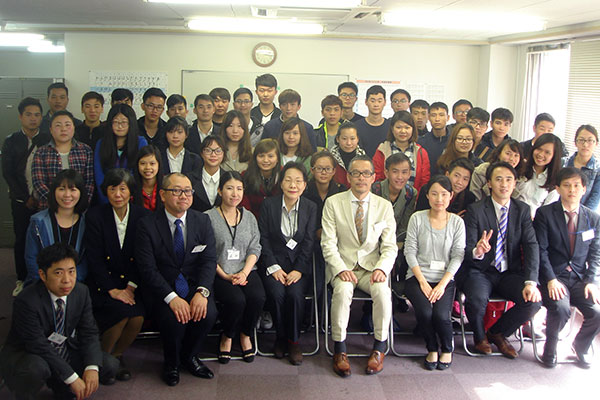
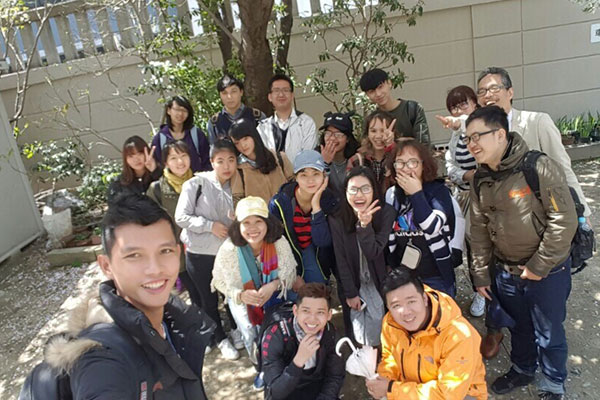
| April | New student orientation New student placement test New student welcome field trip |
|---|---|
| May | Briefing on academic advancement |
| June | 1st EJU Individual Interviews |
Summer(July - September)
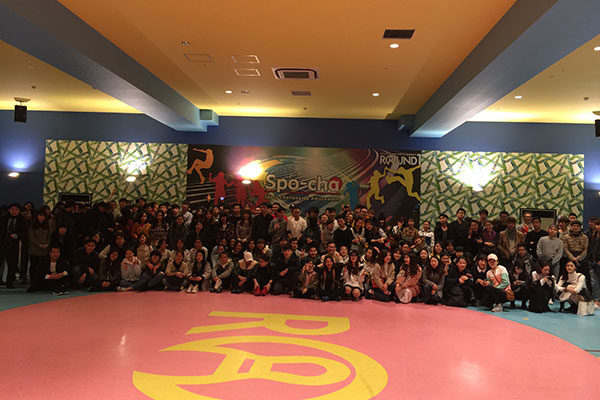
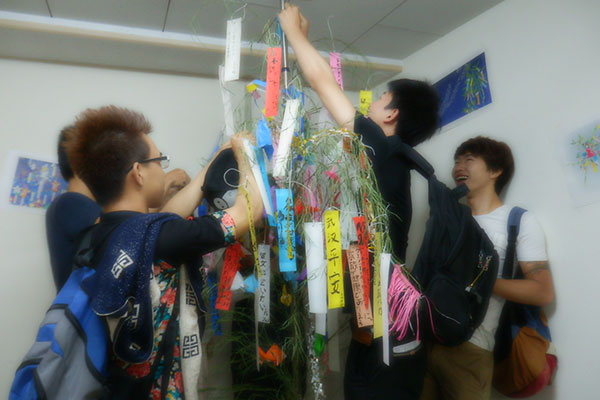
| July | New student orientation New student placement test New student welcome field trip 1st JLPT Tanabata (Star Festival) Party Emergency Drill |
|---|---|
| August | Summer vacation Summer course |
| September | Start of university applications |
Fall(September - December)
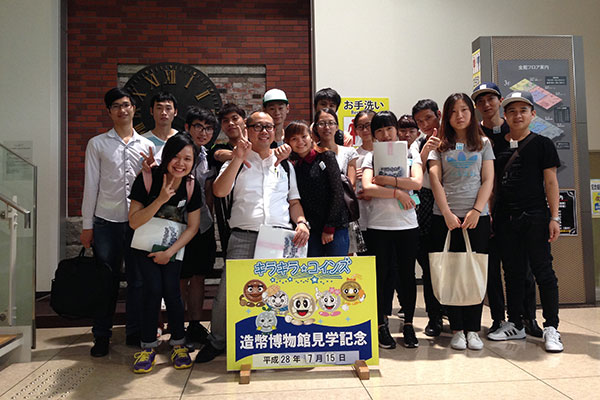
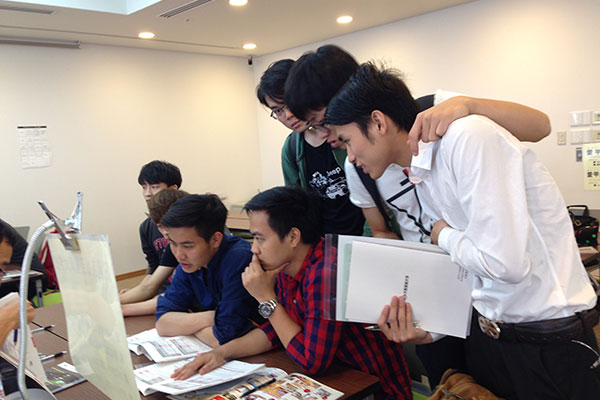
| October | New student orientation New student placement test New student welcome field trip |
|---|---|
| November | 2nd EJU |
| December | 2nd JLPT Visit to the Disaster Prevention Center Winter vacation |
Winter(January - March)
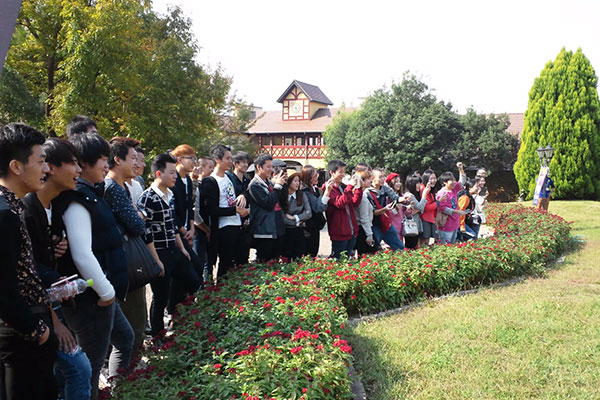
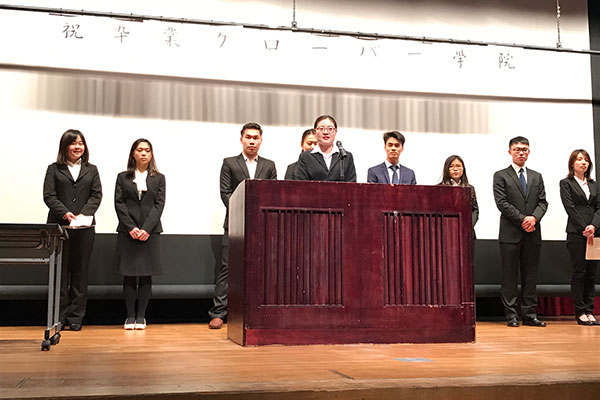
| January | New student orientation New student placement test New student welcome field trip |
|---|---|
| February | Setsubun (Bean Throwing) Festival Speech contest Cultural festival Graduation field trip |
| March | Graduation ceremony Spring vacation |